
Why General Liability Insurance is Crucial for Contractors
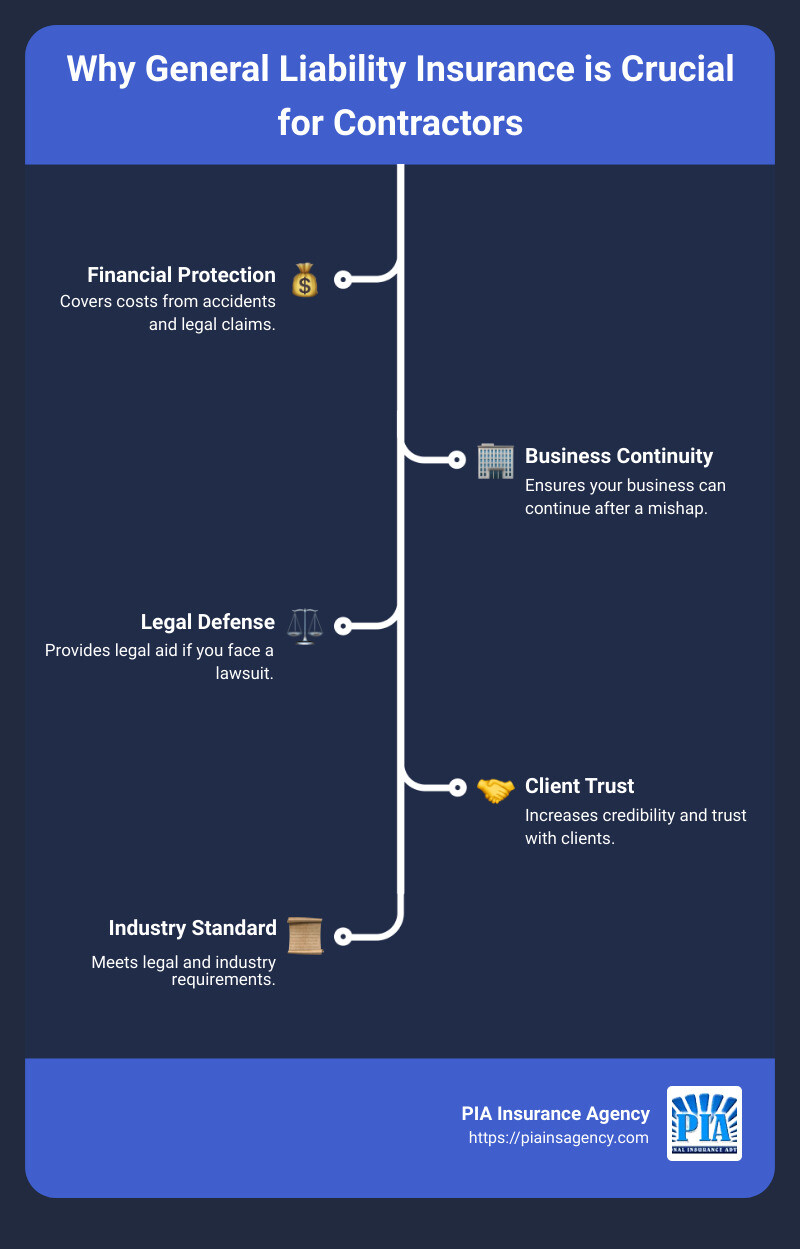
When you’re a contractor, mitigating risks is essential. Especially when it comes to financial protection against accidents and legal claims. That’s where general liability insurance cost for contractors comes into play.
Quick Facts:
- Average cost: Around $1,000 – $3,000 per year for small businesses.
- Key influences: Type of work, revenue, number of employees, coverage amount, location, and claims history.
- Coverage: Bodily injury, property damage, personal and advertising injury, and legal defense costs.
In construction, uncertainties are everywhere. One day you’re building smoothly, and the next, an unexpected mishap could lead to a costly lawsuit. Not having this insurance means risking your entire business and even personal assets.
I’m Patti Yencho. With over three generations in helping families and businesses navigate insurance, I’ve seen how crucial it is for contractors to be protected. My expertise will guide you through understanding the costs and the key factors affecting them in this article.
Understanding General Liability Insurance for Contractors
General liability insurance is a must-have for contractors. It acts as a safety net, protecting your business from financial losses due to accidents, injuries, or property damage that happen during your work. But what exactly does it cover, and how does it work? Let’s break it down.
Definition
General liability insurance for contractors is a type of coverage that shields your business from third-party claims. This means if someone gets hurt or their property is damaged because of your work, your insurance steps in to cover the costs.
Coverage
Here’s what general liability insurance typically covers:
Bodily Injury: If someone gets hurt on your job site, this part of your policy helps cover their medical bills. For example, if a client trips over your tools and breaks an arm, your insurance will cover the medical expenses.
Property Damage: Accidentally damaged a client’s property? This coverage helps pay for repairs or replacement. Imagine you’re painting a house and spill paint on a client’s expensive carpet. Your policy will cover the cost to replace it.
Personal and Advertising Injury: This covers claims of slander, libel, or copyright infringement. If a competitor claims you defamed them in your advertising, your insurance can help cover legal defense costs and any settlements.
Legal Defense Costs: If you’re sued, your policy can help cover the costs of defending your business in court.
Policy Limits
Policy limits define the maximum amount your insurer will pay for a covered claim. For general liability insurance, you typically see limits like:
- $1 million per occurrence: This means the insurer will pay up to $1 million for a single claim.
- $2 million aggregate: This is the total amount the insurer will pay for all claims during the policy period.
For more information on general liability insurance for contractors, visit PIA Insurance Agency.
Factors Influencing the General Liability Insurance Cost for Contractors
When it comes to the general liability insurance cost for contractors, several key factors play a significant role in determining your premiums. Understanding these can help you make informed decisions and potentially lower your costs.
Location
Where you operate your business can greatly impact your insurance costs. Contractors in busy urban areas, like New York City or Los Angeles, often face higher premiums. This is because densely populated regions have more opportunities for accidents and claims.
On the other hand, contractors working in rural areas may enjoy lower premiums due to fewer risks. However, each location has its own unique risks and regulatory environment, affecting insurance prices.
Crew Size
The number of employees you have also affects your insurance costs. More employees mean more potential for accidents or mistakes that could lead to a claim. For instance, a contractor with a large crew will likely pay higher premiums than a solo contractor.
Example: A roofing contractor with ten employees will have higher premiums compared to a one-person painting business because the risk of accidents is greater with more people on the job site.
Coverage Limits
Choosing your coverage limits is crucial. Higher limits provide more protection but come at a higher cost.
Most contractors opt for a policy with a $1 million per-occurrence limit and a $2 million aggregate limit. This provides a good balance between cost and coverage. However, if you feel your business needs more protection, you can opt for higher limits, which will increase your premiums.
Industry Risks
Different types of contracting work come with varying levels of risk. High-risk specialties, like roofing or electrical work, carry higher premiums due to the increased chance of accidents and claims. Conversely, lower-risk jobs, such as interior painting or carpentry, might see more affordable rates.
Fact: Roofers can expect to pay an average of $267 per month for general liability insurance, while locksmiths, considered lower risk, pay around $42 per month.
Summary
- Location: Urban areas = higher premiums; Rural areas = lower premiums.
- Crew Size: More employees = higher premiums.
- Coverage Limits: Higher limits = higher premiums.
- Industry Risks: Riskier jobs = higher premiums.
Understanding these factors can help you navigate the complexities of general liability insurance cost for contractors. Next, we’ll explore the average costs of general liability insurance across different states, giving you a clearer picture of what to expect based on your location.
Average Costs of General Liability Insurance Across Different States
The cost of general liability insurance for contractors can vary significantly depending on the state you operate in. Let’s break down the average premiums in some key states to give you a clearer picture.
California
California is known for its high cost of living, and this extends to insurance premiums as well. Contractors in California pay an average of $144 per month for general liability insurance. The high population density and stringent state regulations contribute to these higher costs.
Example: A contractor working in Los Angeles may face higher premiums compared to someone operating in a smaller city like Fresno due to increased risk and higher operational costs.
Florida
In Florida, contractors can expect to pay about $104 per month for general liability insurance. The state’s high risk of natural disasters like hurricanes can drive up costs. Additionally, the type of work being done can also influence the premium.
Fact: Florida requires all licensed general contractors to carry a minimum of $300,000 in bodily injury and $50,000 in property damage coverage.
Texas
Texas contractors face an average monthly premium of $152. The state’s large size and diverse range of construction projects contribute to this cost. High-risk jobs such as oil and gas construction can further increase premiums.
Statistic: Texas has one of the highest insurance costs for contractors, partly due to the high number of large-scale construction projects.
New York
New York contractors pay an average of $115 per month. The high population density and the complexity of projects in urban areas like New York City can drive up insurance costs.
Case Study: A contractor working on high-rise buildings in Manhattan will likely face higher premiums compared to someone working in upstate New York due to the increased risk and potential for higher claims.
Pennsylvania
In Pennsylvania, the average cost is significantly lower at $57 per month. The state’s lower population density and fewer high-risk construction projects contribute to these more affordable premiums.
Comparison: Pennsylvania’s lower costs make it an attractive state for contractors looking to keep their insurance expenses down.
By understanding these average costs, contractors can better budget for their general liability insurance cost based on their location. Next, we’ll dive into how to choose the right general liability insurance policy to ensure you get the best coverage for your needs.
How to Choose the Right General Liability Insurance Policy
Choosing the right general liability insurance policy for your contracting business can be daunting. But don’t worry, we’ll break it down into simple steps to help you make the best decision.
Assessment Needs
First, assess your business needs. Ask yourself:
- What type of projects do I usually handle? Are they high-risk or low-risk?
- How many employees do I have? More employees can increase your risk.
- What is my annual revenue? Higher revenue might require higher coverage limits.
- Where do I operate? Location can affect both risks and premiums.
Understanding your specific needs will help you identify what coverage limits and additional policies you might require, like workers’ compensation or commercial auto insurance.
Compare Quotes
Next, gather quotes from multiple insurance providers. This helps you understand the market rates and find the best deal for your needs. Here’s how to do it:
- Contact multiple providers: Reach out to trusted insurance companies and request quotes.
- Use online tools: Some platforms allow you to compare quotes from different insurers quickly.
- Look at package deals: Sometimes bundling policies (like general liability with property insurance) can save you money.
Read Reviews
Finally, read reviews and testimonials from other contractors. This gives you insight into the insurer’s reliability and customer service. Look for reviews on:
- Claims process: Is it smooth and hassle-free?
- Customer support: Are they responsive and helpful?
- Policy flexibility: Can you adjust your coverage easily as your business grows?
By following these steps, you can choose a policy that offers the right coverage at a competitive price, ensuring your business is well-protected.
Reducing Costs of General Liability Insurance for Contractors
Reducing the general liability insurance cost for contractors can make a big difference to your bottom line. Here are some effective strategies to keep premiums low without sacrificing necessary coverage:
Risk Management
Implementing a robust risk management plan is crucial. This involves identifying potential risks associated with your business activities and taking proactive steps to mitigate them.
For instance, regular risk assessments can help pinpoint areas where accidents are likely to occur. Addressing these issues before they lead to claims can save you money.
Example: A construction firm might identify that slips and falls are common on their job sites. By installing non-slip surfaces and enforcing strict footwear policies, they can reduce incidents and, in turn, lower their insurance premiums.
Safety Training
Developing and enforcing strict safety protocols can drastically reduce the likelihood of workplace accidents. Conducting regular safety training sessions for all employees ensures they are aware of best practices and safety procedures.
Example: A roofing company might conduct monthly safety drills and provide training on harness use. This not only helps in preventing incidents but also demonstrates to insurance providers that your business is committed to maintaining a safe work environment, potentially leading to lower insurance premiums.
Deductibles
Opting for higher deductibles can significantly lower your premium costs. A deductible is the amount you agree to pay out of pocket before your insurance coverage kicks in. By choosing a higher deductible, you take on more risk upfront, which reduces the cost of your premiums.
Example: A small contractor might choose a $1,000 deductible instead of a $500 one. This choice could lower their monthly premium, making the insurance more affordable in the long run.
Bundle Policies
Bundling multiple insurance policies with the same provider can lead to significant discounts. For example, combining general liability insurance with commercial property insurance or workers’ compensation insurance can lower overall costs.
Example: A general contractor might bundle their general liability insurance with a commercial auto policy. This not only simplifies managing their insurance but also reduces the total premium they pay.
By implementing these strategies, you can effectively reduce your contractor insurance costs. Each step not only helps in lowering premiums but also reinforces the stability and safety of your business operations, making it a win-win situation.
Next, let’s explore some frequently asked questions about general liability insurance for contractors to clarify any remaining uncertainties.
Frequently Asked Questions about General Liability Insurance for Contractors
How much does general liability insurance typically cost for contractors?
The cost of general liability insurance for contractors can vary widely based on several factors. On average, contractors pay between $796 to $1230 per year. This cost is influenced by the inherent risks in the construction industry, which makes it one of the more expensive general liability insurance types.
For example, a contractor working in a bustling city like New York might pay more compared to one in a less populated area due to higher risk exposure.
What factors affect the cost of general liability insurance for contractors?
Several key factors influence the general liability insurance cost for contractors:
Location: Operating in urban areas with higher population densities can increase premiums due to higher risk of accidents.
Crew Size: More employees mean a higher chance of accidents, leading to higher insurance costs.
Coverage Limits: Higher coverage limits provide more protection but come with increased premiums. Typical limits range from $1 million to $2 million.
Industry Risks: High-risk specialties like roofing or demolition will see higher premiums compared to lower-risk jobs like painting.
Claim History: A history of frequent claims can raise your premiums, while a clean record might help lower them.
How can contractors reduce their general liability insurance premiums?
There are several strategies contractors can use to reduce their insurance premiums:
Risk Management: Implementing strong safety protocols can reduce the likelihood of accidents, which can help lower premiums.
Safety Training: Regular safety training for your crew can minimize accidents and claims, leading to lower costs.
Higher Deductibles: Opting for a higher deductible can reduce your premium, though you’ll pay more out of pocket if a claim arises.
Bundle Policies: Combining general liability insurance with other policies like commercial auto insurance can lead to discounts.
By focusing on these areas, contractors can manage and potentially reduce their general liability insurance costs, ensuring they have the necessary protection without overspending.
Conclusion
PIA Insurance Agency
At PIA Insurance Agency, we understand the unique challenges contractors face in managing risks and securing comprehensive insurance coverage. Our expertise lies in tailoring insurance solutions that fit your specific needs, ensuring you get the right protection without breaking the bank. We’re more than just an insurance provider; we’re your partner in risk management.
Our team is dedicated to helping you navigate the complexities of general liability insurance. We offer personalized service and ongoing support to ensure your business is safeguarded against unforeseen events. Whether you need a review of your current policy or are looking for new coverage, we’re here to help.
Get started with a comprehensive review of contractor insurance costs today.
Future Trends
The landscape of contractor insurance is always evolving. Staying informed about future trends can help you make better decisions for your business. Here are a few trends to keep an eye on:
Technological Advancements: Emerging technologies like drones and AI can help identify risks early, potentially lowering insurance premiums.
Regulatory Changes: New regulations may affect coverage requirements. Staying updated ensures you remain compliant and adequately covered.
Customized Policies: Insurance companies are increasingly offering more tailored policies to meet the specific needs of different contracting businesses.
By staying ahead of these trends, you can optimize your insurance coverage and ensure your business is well-protected.
Policy Optimization
Optimizing your insurance policy involves more than just finding the lowest premium. It’s about ensuring you have the right coverage for your specific needs. Here are some tips for policy optimization:
Regular Reviews: Periodically review your policy to ensure it still meets your needs, especially as your business grows.
Risk Management: Implementing a robust risk management strategy can help reduce claims and lower your premiums.
Consult with Experts: Work with insurance experts who understand the nuances of contractor insurance. They can help you identify gaps in your coverage and recommend the best options.
At PIA Insurance Agency, we’re committed to helping you optimize your insurance policy. Our goal is to provide you with peace of mind, knowing that your business is protected.
Choosing the right contractor insurance is not just about protecting your business—it’s about ensuring its future. Let PIA Insurance Agency guide you every step of the way.