
Electrician's general liability insurance usually runs $57 to $113 per month, and Florida electricians often pay about $122 per month, or $1,467 per year, because the state is a tougher risk environment. That's not a luxury expense. It's a basic business tool that helps keep one claim from wiping out your cash flow, your license opportunities, or both.
You already know the physical side of the job. Panels, service upgrades, troubleshooting, generators, surge issues after storms, callbacks on old wiring. The technical risk is obvious. The financial risk is what catches contractors off guard.
A homeowner doesn't care that you followed your process if their property is damaged and your name is on the invoice. A general contractor won't care that you're careful if your certificate doesn't match the contract. And in Florida, weather and building conditions can turn a small electrical issue into a large liability problem fast.
Electrician's liability insurance matters because your work can keep creating risk long after you leave the site. That's especially true in a state where storms, humidity, and aging buildings put more stress on systems. If you're treating insurance like paperwork, you're underestimating it. It protects your revenue, your reputation, and your ability to keep bidding jobs.
Protecting Your Livelihood from Shocks and Suits
Electrical injuries and property damage claims get expensive fast. In Florida, they can get worse after one storm, one power surge, or one callback tied to moisture-damaged equipment.
That is the primary reason electrician's liability insurance belongs in your business plan. It protects the income your license produces. A claim does not have to be valid to cost you money. You can still get hit with attorney fees, job delays, contract disputes, and a customer who refuses final payment while the issue is sorted out.
For Florida electricians, the exposure is broader than many national guides admit. Hurricanes, salt air near the coast, heavy humidity, and older buildings put extra stress on electrical systems. A loose connection, failed component, or disputed repair can turn into a much bigger property damage claim when weather and building conditions are already working against you.
Practical rule: If one liability claim would force you to drain savings, miss payroll, or stop taking jobs, get covered before the next service call.
What liability insurance is doing for you
A standard liability policy helps pay for third-party bodily injury, property damage, and completed operations claims. In plain English, it responds when someone says your work injured them, damaged their building, or caused a problem after you left the site.
That matters on small residential jobs and larger commercial work. One damaged panel, one fire allegation, or one trip-and-fall can put months of profit at risk.
It also matters before any claim is filed. Contractors, property managers, and higher-value clients often want proof of coverage before they hand you the job. If your certificates are wrong, your limits are too low, or your exclusions are a bad fit for electrical work, you lose revenue.
Why Florida electricians should not buy coverage blind
Florida is a hard insurance market. Rates, underwriting standards, and carrier appetite shift quickly, especially for contractors tied to storm-related work, older properties, or coastal counties. That is why working with an independent agency matters. Professional Insurance Advisors, LLC can help you compare options and sort out coverage gaps, including professional indemnity insurance for electricians when your risk goes beyond basic bodily injury and property damage claims.
A captive agent can only sell what one carrier offers. An independent agent can help you choose coverage that fits how you work in Florida.
Insurance supports growth, not just defense
Liability insurance does more than pay claims.
- It keeps jobs open. Many GCs and commercial clients require current certificates before work starts.
- It protects cash flow. Defense costs can show up long before fault is settled.
- It protects your reputation. Fast, documented claim handling looks a lot better than excuses.
- It supports marketing that works. If you want to boost electrician business with local SEO, make sure the business behind your website is ready for better clients, tighter contract terms, and larger liability exposure.
More leads are good. More uninsured exposure is not.
Why General Liability Is Only the Beginning

General liability is important. It is not the whole answer.
Too many electricians buy one GL policy and assume they're covered for anything connected to their business. They aren't. Insurance works more like a tool bag than a single tool. Your lineman pliers don't replace a torque screwdriver. Same idea here.
The four risk buckets you actually have
Your business usually faces four separate categories of exposure:
- Third-party claims: A customer, tenant, or passerby says your work caused bodily injury or property damage.
- Professional mistakes: A client says your advice, layout, specification, or workmanship caused a financial loss or a costly correction.
- Business property loss: Tools, materials, and equipment get stolen or damaged.
- Worker injuries: Your employee gets shocked, falls, or gets hurt moving materials.
Each bucket points to different coverage. If you only buy GL, you leave obvious gaps.
General liability handles one slice of risk. It doesn't magically become professional liability, workers' comp, or tools coverage just because the problem happened on your job.
Where electricians get this wrong
The biggest misunderstanding is faulty work. Electricians often assume GL will pay for every dispute tied to their installation. That's not how claims usually work. GL is built around third-party bodily injury, property damage, and completed operations exposure. It isn't designed to solve every workmanship argument.
If your work involves design input, troubleshooting recommendations, code interpretation, or specifications, you should look hard at professional liability. That's the reason many contractors add professional indemnity insurance for electricians. It addresses negligence-style claims that don't fit neatly inside a GL policy.
Think in layers, not in labels
A strong insurance setup isn't "I bought liability." It's "I matched coverage to the way I work."
That means asking simple questions:
- Do you only do residential service calls, or are you on commercial projects?
- Do you have employees?
- Do you store expensive test equipment in trucks?
- Do contracts require higher limits or specific certificates?
- Do you touch smart systems, controls, or EV chargers?
If you can't answer those questions clearly, you probably don't have a real protection plan yet.
Building Your Electrician Insurance Policy
Electrician's liability insurance should be built the same way you price a job in Florida. Scope first, then materials, then the exposures that can wreck your cash flow if you guessed wrong.
A bare-bones policy is cheap right up until it fails.
The core coverages most electricians should review
General liability
General liability is your base layer. It covers third-party bodily injury, property damage, and completed operations claims. It is also the policy property managers, GCs, and commercial clients usually want to see before you step on site.
For many electricians, the insurance buying process often begins here. It should not be where it ends.
Professional liability
Professional liability covers claims tied to errors, omissions, negligent recommendations, and other losses caused by your judgment rather than a simple accident. If you troubleshoot, recommend repairs, interpret code, suggest system changes, or make design-related calls, you have this exposure.
Skip the exact price shopping here unless you are comparing real quotes from real carriers. Rates move based on revenue, job type, claims history, and how much design or advisory work you do. The right question is whether one claim over a bad recommendation would cost more than the premium. For most Florida electricians, the answer is obvious.
Business Owner's Policy
A Business Owner's Policy combines general liability with commercial property. It makes sense if you have an office, a small shop, stored wire and breakers, inventory, or equipment that does not live full-time in a van.
It can also clean up your insurance setup. One package. Fewer gaps. Fewer chances to learn after a loss that one policy excluded what you thought another policy handled.
The coverages electricians forget until they need them
Tools and equipment coverage
Meters, threaders, benders, rotary hammers, and specialty test gear are expensive to replace fast. Florida adds another problem. Storms, flooded vehicles, and chaotic post-hurricane job sites create more chances for theft and damage.
If your tools earn your revenue, insure them that way.
Commercial auto
A work truck needs commercial auto if it is owned by the business, used daily for jobs, stocked with materials, or driven by employees. Personal auto is the wrong place to cut corners. One serious crash can put your vehicle, your claim, and your liability exposure into a fight you do not want.
Workers' compensation
If you have employees, workers' comp is usually part of staying in business, not a nice extra. Electrical work brings shock injuries, burns, falls, and strain injuries. Medical bills pile up fast, and lost-time claims get expensive even faster.
Florida contractors also run into contract requirements, certificate requests, and hiring rules that make skipping this coverage a bad business decision.
Build the policy around your actual Florida operation
A one-truck residential electrician in Sarasota does not need the same setup as a contractor wiring tenant improvements in Orlando or handling service work across South Florida after storms. Hurricanes, salt air, humidity, and surge-related losses change the risk profile here. Your policy should reflect that.
Independent agents prove their worth. In Florida, carrier appetite shifts fast, underwriting gets tighter after storm seasons, and two quotes that look similar on price can be very different on exclusions and endorsements. An independent agency such as PIA can compare carriers, explain what is missing, and help you build a policy that fits the way you work instead of forcing you into a generic national package.
Electrician Insurance Coverage at a Glance
| Coverage Type | What It Protects | Example Scenario |
|---|---|---|
| General Liability | Third-party injury, property damage, completed operations | A client says your completed wiring work caused property damage after the job |
| Professional Liability | Claims tied to errors, omissions, and technical judgment | A customer claims your diagnosis or recommendation led to a costly correction |
| Business Owner's Policy | Liability plus business property | A covered property loss damages office contents or stored materials while liability stays in place |
| Tools and Equipment | Mobile tools, test gear, and equipment | Specialty electrical tools are stolen from a job site or damaged after a storm |
| Commercial Auto | Business vehicles and road liability | Your work van is involved in an accident on the way to a service call |
| Workers' Compensation | Employee injury costs and wage-related exposure | A helper is injured while working on a job site |
Buy coverage based on your contracts, vehicles, tools, payroll, and scope of work. Do not buy it based on what another electrician says he carries.
Same trade. Different exposures. Different policy.
Navigating Florida's Unique Risks and Regulations

Florida puts more stress on electrical work than many other states. Heat, humidity, salt air, lightning, and hurricanes all raise the odds that a completed job gets tested months or years after you leave the site.
That matters for liability.
A service call in Tampa or Fort Myers does not carry the same post-job exposure as the same work in a milder, drier state. Moisture gets into boxes and panels. Storm surge and wind-driven rain expose weak points. Power interruptions and surges hit systems hard after major weather events. If a customer blames your work for the damage, your policy gets pulled into the fight.
Humidity, storms, and long-tail claims
Completed operations risk is a bigger deal in Florida because the environment keeps working against the installation. Fire claims tied to electrical failures are already a major source of property loss nationally, and hurricane recovery adds another layer of scrutiny when damaged buildings are inspected and repairs are questioned. The point is simple. A job that looked fine at closeout can still become a claim later.
That is why cheap general liability can become expensive in the wrong way.
If you want a clearer picture of how Florida conditions affect pricing and coverage decisions, review this breakdown of electrical contractors insurance cost in Florida. It explains why storm exposure, job type, payroll, and claims history move your premium.
Why standard limits can be too low
There is no single limit that fits every electrician in Florida. Your contract usually sets the floor, and your real exposure should decide whether you go higher. Residential service contractors may get by with lower limits than electricians wiring multifamily buildings, restaurants, medical offices, or industrial sites. Once you step into commercial work, general contractors and property managers often expect higher limits, additional insured status, and proof that completed operations coverage is still in force.
If your certificate misses the contract requirement, you can lose the job before price even gets discussed.
An independent agent provides significant value. Florida's insurance market is tougher than the national articles make it sound. Carriers use different exclusions, storm-related underwriting standards, and appetite by class of work. PIA can compare those options, flag contract problems before you sign, and help you choose limits that match the jobs you prefer.
Florida compliance is not paperwork theater
Licensing, certificates, and contract review need real attention in this state. Buy a policy that fits your license, your crew, your vehicles, and your project mix. Do not buy the cheapest quote and hope the certificate works later.
Use this checklist before you sign:
- Verify the contract insurance requirements: Check limits, additional insured wording, waiver of subrogation language, and any umbrella requirement.
- Confirm completed operations coverage: Florida claims often show up after storms, moisture intrusion, or later system failure.
- Review workers' comp status carefully: If you have employees, your setup needs to match payroll and classification.
- Check endorsements before the certificate is issued: Blanket wording is not always enough for a demanding GC or property manager.
Florida electricians do better with Florida-specific advice. You need coverage built for hurricanes, humidity, and tougher contract standards. Generic national packages miss that.
What Electrician Liability Insurance Costs in Florida
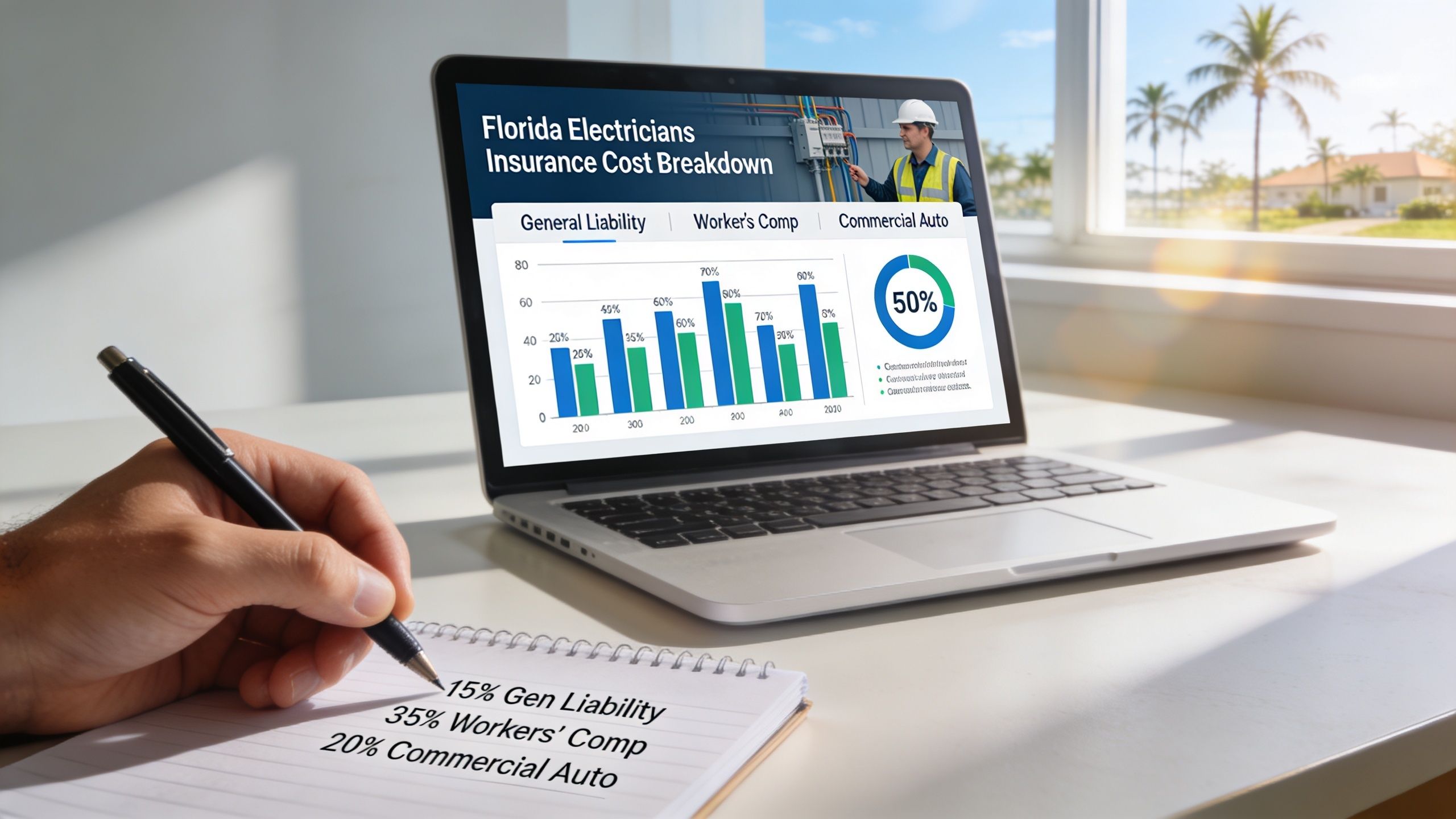
Florida electricians usually pay more than the national averages. Hurricanes, water intrusion, tougher property exposure, and a harder insurance market push premiums up fast.
What you should expect to pay
For many small electrical contractors, general liability is still one of the cheaper parts of the insurance program. A basic policy may fit the budget. The full insurance spend changes once you add workers' comp, commercial auto, tools, equipment, and property coverage.
A bundled Business Owner's Policy can make sense if you have an office, inventory, or valuable business personal property. It also keeps coverage cleaner than buying scattered policies that do not line up well at claim time.
If you want a Florida-specific breakdown of pricing factors, review this guide to electrical contractors insurance cost.
What drives the price
Underwriters price electricians based on exposure. They are judging how expensive your next claim could be.
Type of electrical work
Service calls and light residential remodels usually price better than commercial build-outs, industrial work, generator installs, controls, or higher-voltage jobs. The more complex the work, the more damage a mistake can cause.
Payroll and sales
More payroll means more people on job sites. More revenue usually means more projects, more contracts, and more chances for property damage or injury claims. Premium follows that growth.
Loss history
Claims matter. One paid loss may not sink a submission, but repeated losses, canceled coverage, or poor safety controls will push pricing up and reduce carrier options.
Florida location and storm exposure
A contractor working in coastal counties can face different underwriting pressure than one working inland. Carriers also look closely at where you store materials, park vehicles, and keep tools because wind, flooding, and theft losses are a bigger issue in Florida than many national articles admit.
Coverage choices
Higher limits cost more. So do endorsements for additional insured status, waiver of subrogation, primary and noncontributory wording, and broader completed operations protection. Those items are common on Florida jobs, and they should be priced into your quote from the start.
Cheap insurance usually gets expensive later
A low premium often means lower limits, tighter exclusions, or missing pieces. That is a bad trade for electricians working around energized systems, finished interiors, and expensive equipment.
The right question isn't whether a quote is cheap. It is whether that policy can pay for a fire claim, water damage loss, or post-storm failure allegation without leaving your business to fund the gap.
Independent agents matter more in Florida because carrier appetite changes quickly here. PIA can compare policy structure, not just price, and help you avoid buying a quote that looks fine on the certificate but falls apart when a claim hits.
Your Step-by-Step Guide to Getting Covered

Getting insured shouldn't be confusing. Most problems happen because electricians shop too fast, give incomplete information, or buy coverage before reviewing their contracts.
Step 1 and Step 2
Map your real exposure.
List the work you do. Residential service, panel swaps, tenant improvements, generators, controls, EV chargers, or smart systems. Your policy needs to reflect reality.Gather the paperwork.
Pull together your business details, loss history, payroll information, vehicle list, and any current certificates or contracts. Clean submissions get cleaner quotes.
Step 3 and Step 4
Read your job requirements before you buy.
General contractors and property managers often care about exact limits, completed operations, and certificate wording. If you buy first and read later, you can end up paying twice.Compare structure, not just premium.
Look at limits, exclusions, endorsements, and whether coverages fit together. A quote isn't useful if it leaves a hole in your business.
Step 5
- Use an independent agent when the risk is layered.
Using an independent agent allows many Florida electricians to save time. An independent agency can compare carriers and help match GL, professional liability, property, auto, and workers' comp to the way your operation runs. If you're a one-person shop, a page on self-employed electrician insurance can help you narrow what to ask for before you request quotes.
Professional Insurance Advisors, LLC is one Florida-based independent agency that works across business coverages such as BOP, general liability, commercial auto, and workers' comp. For electricians, that kind of access matters because Florida risks don't fit neatly into a generic online form.
Don't overcomplicate the process. Just be thorough. Good insurance starts with accurate information and blunt conversations about what could go wrong.
FAQ on Modern Electrical Risks
Modern electrical jobs create claims older policies often handle poorly. EV chargers, smart panels, battery storage, and app-connected controls add product, installation, and tech-related exposure to a trade that already carries serious property damage and injury risk. In Florida, that risk gets worse after storms and in heavy humidity, when equipment failures and corrosion disputes are more common and everyone starts pointing fingers.
Does electrician's liability insurance cover EV charger work
EV charger work needs a closer policy review than standard branch wiring or fixture replacement. A bad install can trigger property damage, bodily injury, fire allegations, or a contract dispute over system performance. If the charger connects to software, remote monitoring, payment systems, or load management tools, you can also run into cyber or technology exclusions that many electricians never notice until a claim is denied.
Ask your agent plain questions. Does your policy address completed operations for charger installs? Are there exclusions tied to charging stations, battery systems, or connected equipment? If you subcontract any part of the work, does the carrier require written subcontractor agreements and proof of matching coverage?
What about smart home and IoT systems
These claims split fast. One part can look like faulty workmanship. Another can turn into lost use, system failure, or a dispute over who configured the app, network, or control settings incorrectly.
Focus on three areas:
- Cyber endorsements: If your install involves remote access, mobile apps, cloud controls, or connected devices, check for cyber-related exclusions.
- Professional liability: General liability handles bodily injury and property damage. It usually does not handle a claim that your design, programming, or system integration advice caused the loss.
- Job records: Keep specs, signed scope changes, startup notes, and client approvals. That paperwork matters when a homeowner, GC, or property manager says the system never worked right.
Florida electricians should be especially careful with connected exterior equipment. Salt air, wind-driven rain, and heat can accelerate failure, and the dispute often becomes whether the product failed or the installation did.
Can estimating and documentation reduce claim headaches
Yes. Better estimates and tighter documentation cut down the two biggest claim problems. Scope creep and blame shifting. If the proposal is vague, everyone remembers the job differently once there is damage, delay, or a callback.
Use clear line items, exclusions, change orders, and equipment notes. If you want a more organized front-end process, Exayard estimating software for electricians is one example electricians use to build clearer estimates and document revisions.
Should Florida electricians review coverage more often now
Yes. Review it at least once a year, and review it again any time your work changes. Adding EV chargers, generators, battery backup, marina work, service contracts, or smart control systems changes your exposure. Florida also has a harder insurance market than many states, so carrier appetites and exclusions can shift faster than electricians expect.
An independent agent earns their keep. A Florida-based independent agency like Professional Insurance Advisors, LLC can compare carriers, spot exclusions that matter in this state, and help you avoid buying a policy built for a generic national contractor instead of a Florida electrician dealing with hurricanes, moisture, and tougher placement conditions.
If you're a Florida electrician and want help reviewing electrician's liability insurance, Professional Insurance Advisors, LLC can help you compare options for general liability, BOP, commercial auto, workers' compensation, and related business coverage based on how your operation works.