
Bailee Letter: 2025 Essential Guide
Understanding the Bailee Letter’s Role
A bailee letter is a crucial document in finance and asset management. It’s a formal notice that informs a party holding property (the bailee) that a third party (often a lender) has a security interest or claim on that property.
Here’s a quick overview of what a bailee letter does:
- Definition: A letter acknowledging a third-party’s security interest in goods held by a bailee.
- Purpose: Protects a lender’s collateral, ensuring assets aren’t released without their consent.
- Key Use: Common in situations like warehouse lending, inventory financing, and mortgage loan transfers.
- Benefit: Helps prevent financial loss and clarifies ownership claims.
In simple terms, think of it as a special instruction given to someone temporarily holding your valuables. It tells them: “Hey, someone else also has a claim on these items, so don’t move them without their say-so.” This protects the lender and reduces financial risks for everyone involved. For businesses, especially those dealing with inventory or loans, understanding this document is key to managing risk.
I’m Patti Yencho from PIA Insurance Agency, and with over 26 years of experience helping Florida families and businesses, I understand the importance of comprehensive risk management through documents like the bailee letter. We focus on a “whole life or risk” approach to protect your assets and future.
What is a Bailee Letter and Who Are the Parties Involved?
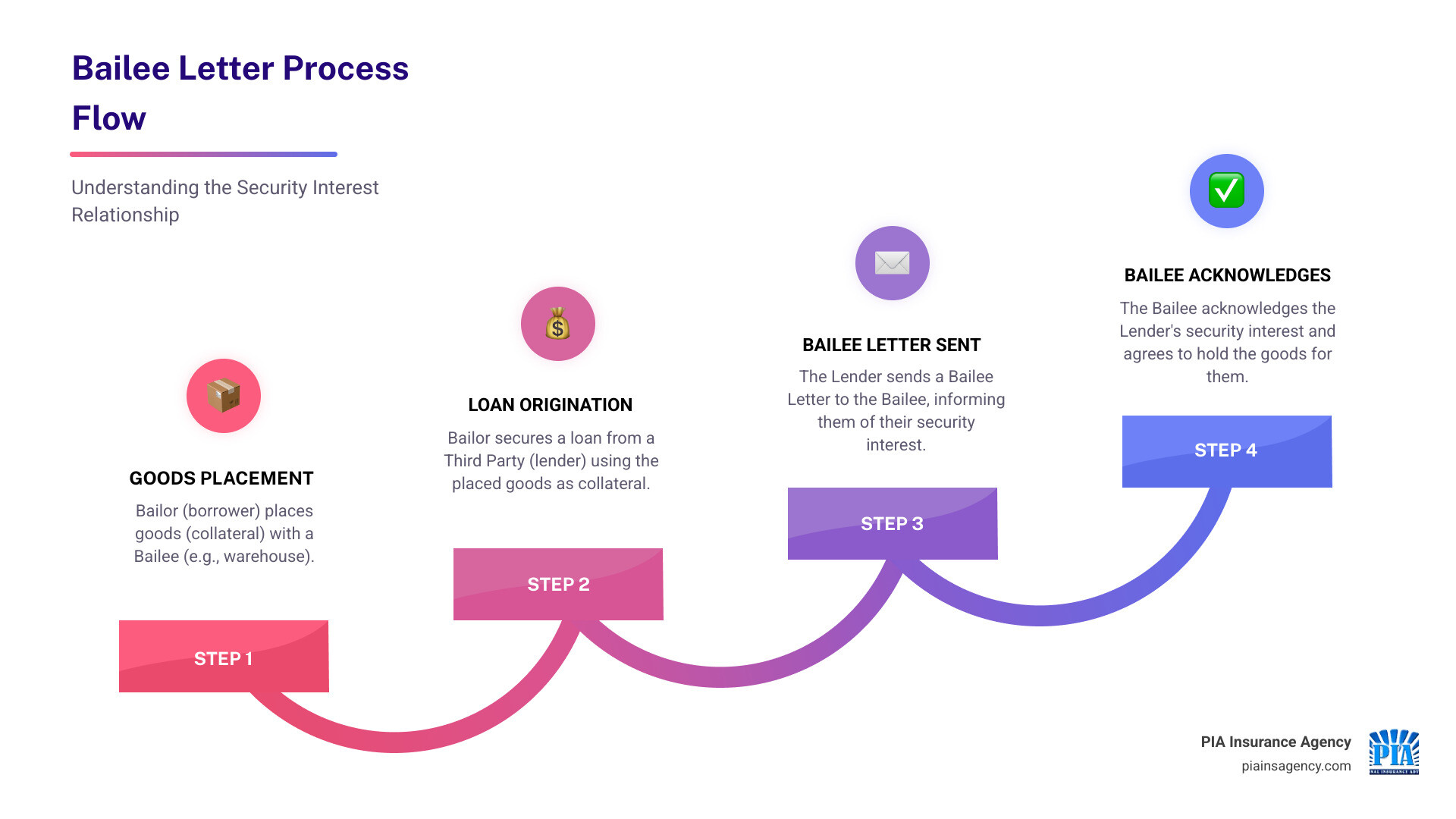
Picture this: you own a warehouse full of valuable inventory, but you need cash for your business. You take out a loan using that inventory as collateral. Here’s the catch – your goods are stored at a third-party warehouse across town. How does your lender make sure those goods don’t mysteriously disappear or get sold without their permission? Enter the bailee letter.
A bailee letter creates a legal safety net in what’s called a bailment relationship. It’s essentially a formal heads-up that tells whoever is holding your property: “Hey, someone else has a financial claim on these items too.” This isn’t just a friendly reminder – it’s a legally binding document that protects everyone’s interests.
In finance and accounting, these letters pop up everywhere. Think mortgage warehouse lending, where loan documents need protection, or inventory financing, where goods serve as collateral. The bailee letter acts as legal notification to ensure that property serving as collateral stays put until the loan is settled.

Alt Text: Diagram showing the relationship between a bailor, bailee, and a third-party lender in a bailee letter arrangement.
The Primary Purpose of a Bailee Letter
The main job of a bailee letter is protecting security interests. When a lender provides financing secured by collateral they can’t physically touch, this document becomes their insurance policy. It prevents unauthorized sale of the collateral and makes crystal clear who has the superior claim on those assets.
Let’s say you’re working with a client who runs a mortgage company. They originate loans but need working capital, so they borrow money using their loan portfolio as collateral. Those loan documents sit with a document custodian – not with the lender who’s financing the operation. The bailee letter tells that custodian: “Don’t release these documents without our say-so.”
This system facilitates financing in industries where inventory and movable assets change hands frequently. It’s particularly crucial in warehouse lending and inventory financing, where the collateral might be scattered across multiple locations. Without this legal framework, lenders would face enormous risks, and many financing arrangements simply wouldn’t be possible.
The letter also serves as a roadmap for releasing the lien. Once the borrower pays off their debt, the bailee letter typically includes instructions on how the property should be released and returned to its rightful owner.
The Three Key Parties in the Transaction
Every bailee letter involves a three-way dance between distinct parties, each with their own role and responsibilities.
The bailor is your client – the property owner who needs financing. They temporarily hand over possession of their valuable assets to someone else while using those same assets as loan collateral. Think of a business owner who stores inventory at a public warehouse but borrows against that inventory to fund operations. They’re still the owner, but they’ve given up physical control.
The bailee is the custodian holding the property. This could be a warehouse company, a document storage firm, or even a specialized custodian for mortgage notes. As our bailee definition explains, bailees have a fiduciary responsibility to care for property that isn’t theirs. They must exercise reasonable care and follow specific instructions about how that property can be handled or released.
Finally, the secured third party is typically the lender or investor who’s putting up the money. They have a security interest in the property even though they never physically possess it. The bailee letter is their protection – it establishes their superior claim and ensures the bailee acknowledges their rights.
This triangular relationship creates a system of checks and balances. The bailor gets their financing, the bailee knows exactly what they can and can’t do with the property, and the lender gets security for their investment. It’s a contractual agreement that turns what could be a messy situation into a well-organized business arrangement.
For accountants and financial advisors, understanding these relationships is crucial when advising clients on secured transactions and risk management strategies.
Key Components of a Standard Bailee Letter
Creating an effective bailee letter is like building a house – you need all the right pieces in place for it to stand strong. Over my years helping Florida businesses steer complex financial arrangements, I’ve seen how a well-crafted bailee letter can save everyone involved from costly headaches down the road.
The foundation of any solid bailee letter starts with clear identification of all parties. This isn’t the place to be vague or assume everyone knows who’s who. The letter must spell out exactly who the bailor is (the property owner), who the bailee is (the one holding the property), and who the secured third party is (usually the lender). Think of it as introducing everyone at a dinner party – nobody should be left wondering who’s sitting at the table.
Next comes the detailed description of property that’s being held. This is where precision matters most. Whether we’re talking about mortgage notes, inventory in a warehouse, or valuable equipment, the description needs to be so clear that there’s no room for confusion. Fannie Mae actually requires that a bailee letter “state that the notes identified are pledged to a named third party.” Serial numbers, quantities, specific identifiers – all these details matter when protecting your interests.
The loan or transaction details provide crucial context for why this letter exists in the first place. This section connects the dots between the property being held and the financial agreement that created the need for security. It’s like providing the backstory that makes everything else make sense.
Here’s where things get really important – the acknowledgment of superior lien or security interest. This is the heart of the whole document. The bailee is essentially saying, “I understand that this third party has first dibs on this property.” As legal definitions put it, the letter acknowledges “the collateral agent’s lien with respect to that inventory.” Without this acknowledgment, the entire protective purpose of the letter falls apart.
The instructions for release or disposal section is where you spell out the rules of the game. When can the property be released? To whom? Under what conditions? Fannie Mae’s requirements are crystal clear on this point, stating that “the third party’s lien will be released only if proceeds from the mortgage transfer are delivered according to instructions.” This prevents any well-meaning but costly mistakes.
Don’t forget about the bailee’s duties and responsibilities. Beyond just holding onto the property, what exactly is expected? This might include maintaining the property in good condition, preventing unauthorized access, or ensuring proper storage conditions. These obligations reinforce the bailee’s fiduciary duty and help everyone understand their role.
Finally, specifying the governing law becomes especially important when dealing with multi-state transactions. For our Florida clients, this ensures everyone knows which state’s laws will apply if any disputes arise. It’s a small detail that can save enormous complications later.
When all these components work together, you get a robust legal instrument that protects everyone involved. It’s an essential part of any comprehensive Bailee Contract and helps create the clear boundaries that make complex financial transactions possible.
Legal Significance and Responsibilities in Florida
When we talk about a bailee letter, we’re not just discussing a simple piece of paperwork. This document carries serious legal weight that can make or break financial transactions, especially here in Florida where our diverse economy relies heavily on asset-backed lending and warehouse operations.
Think of it this way: once that bailee letter is signed, everyone involved suddenly has skin in the game in ways they might not have expected. The legal landscape shifts, creating new obligations and protections that can lead to significant consequences if ignored.
For bailors (the borrowers), the letter formalizes what they’ve already agreed to – their property is now officially tied up as collateral. They can’t just walk into the warehouse and demand their goods back without clearing things with their lender first. It’s like having a legal lock on their assets until they’ve met their obligations.
The bailee – whether it’s a warehouse in Jacksonville or a document custodian in Tampa – suddenly finds themselves with a heightened duty of reasonable care. They’re no longer just storing someone’s stuff; they’re protecting a lender’s collateral. If they mess up and release property without proper authorization, they could face a lawsuit for wrongful disposal of assets or even conversion charges. That’s why understanding What is Bailee Coverage? becomes absolutely critical for these businesses.
How the Letter Protects the Secured Party
For lenders and investors, the bailee letter is like having a security guard for their collateral. It provides perfection of security interest, which is legal speak for “your claim is now officially recognized and enforceable.” This means if the borrower defaults, the lender gets priority in foreclosure – they’re first in line to collect from the collateral.
The letter also serves as a giant red flag to anyone thinking about buying the collateral from the borrower. It’s notice to potential buyers that someone else has a claim on these assets. As The Florida Bar notes, these protections are essential in preventing fraud and ensuring legitimate claims are honored.
Most importantly, the letter gives the secured party control over collateral. The bailee can’t release anything without their say-so. When the loan is paid off, the letter provides a clear pathway for release of lien upon payment, making sure everyone knows the deal is done and the assets are free and clear.
The Bailee’s Obligations Under the Agreement
Once a bailee signs that letter, they’re taking on some serious responsibilities. Safeguarding property becomes their top priority – they need to protect those assets from damage, theft, or loss with reasonable care. No using the borrower’s inventory for their own purposes either; prohibiting unauthorized use is a fundamental rule.
The most critical obligation is following release instructions to the letter. The bailee absolutely must stick to what the bailee letter says about when and how property can be released. They can’t cut corners or make exceptions, even if the original property owner is standing there asking for their stuff back.
When it’s time for returning property, the bailee needs to make sure it goes to the right party in the same condition it was received. If they drop the ball through negligence, they face liability for negligence – potentially owing the secured party the full value of the collateral.
For accountants and financial advisors in Florida, understanding these legal implications is crucial when advising clients on asset-backed lending. The professional liability for accountants can be significant if they don’t properly guide clients through these arrangements. That’s where robust Errors and Omissions (E&O) risk coverage becomes essential – something we specialize in at PIA Insurance Agency, helping protect professionals who steer these complex financial waters every day.
Real-World Scenarios: Where Bailee Letters are Essential
Understanding when a bailee letter comes into play helps clarify why this document is so vital in today’s complex financial world. These letters aren’t just sitting in legal textbooks – they’re actively protecting millions of dollars in assets across Florida and beyond every single day.

Alt Text: A warehouse interior illustrating an inventory financing scenario where a bailee letter is used to secure a loan against stored goods.
Mortgage warehouse lending represents perhaps the most common and critical use of bailee letters in today’s market. Picture this: a mortgage company in Miami originates home loans but needs immediate cash flow to fund new mortgages before selling them to larger investors. They secure a warehouse line of credit, using their mortgage notes as collateral. Here’s where it gets interesting – those valuable mortgage notes are often held by a separate document custodian for safekeeping.
The warehouse lender sends a bailee letter to this custodian, essentially saying “We have first dibs on these notes until our loan is paid back.” Fannie Mae’s Selling Guide specifically outlines requirements for these letters, noting they’re essential when mortgage notes are pledged to a third party. Without this letter, the custodian might accidentally release those valuable notes to the wrong party, leaving the lender high and dry.
Inventory financing scenarios play out differently but follow the same protective principle. Imagine a Florida-based electronics distributor who stores their inventory in a third-party warehouse facility. When they need working capital, they use that inventory as loan collateral. The lender immediately sends a bailee letter to the warehouse operator, making it crystal clear that those goods can’t be released without the lender’s permission. This prevents the borrower from selling the collateral and disappearing with the cash while still owing the loan.
Equipment financing situations often involve expensive machinery or construction equipment that might be temporarily held by repair facilities or specialized storage companies. As we discuss in our guide on Insurance for Construction Equipment, these assets represent significant value. When this equipment serves as loan collateral, a bailee letter ensures the facility holding it understands there’s a lender with legal claim to those assets.
Art and valuables storage presents unique challenges that bailee letters handle neatly. High-net-worth individuals often store valuable artwork, rare collectibles, or precious metals in specialized secure facilities. When these items back loans or investments, the storage facility receives a bailee letter acknowledging the lender’s security interest. This prevents unauthorized sales or transfers that could leave lenders without recourse.
Consignment arrangements sometimes require bailee letters when the consigned goods serve as collateral. If an artist places work in a gallery on consignment but has used that same artwork to secure a business loan, the gallery needs to know about the bank’s interest through a formal bailee letter. This prevents the gallery from inadvertently selling the piece without satisfying the bank’s claim first.
These real-world applications demonstrate why accountants and financial advisors need to understand bailee letters thoroughly. When advising clients on asset-based lending or complex financing arrangements, recognizing when these letters are necessary can prevent costly mistakes and potential liability issues. It’s exactly this type of professional knowledge that makes robust errors and omissions coverage so important for financial professionals.
Frequently Asked Questions about Bailee Letters
When I work with accountants and financial advisors across Florida, I often get detailed questions about how bailee letters work in practice. These documents can seem straightforward on the surface, but their legal implications and real-world applications often raise important concerns. Let me address the most common questions I hear from our clients.
What happens if a bailee ignores a bailee letter?
This is probably the question that keeps warehouse operators and document custodians up at night – and for good reason. A bailee who ignores the letter and wrongfully releases the property can be held legally liable to the secured third party for the value of the collateral, potentially facing a lawsuit for damages or conversion.
The consequences can be quite serious. When a bailee disregards a bailee letter, they’re not just being impolite – they’re potentially committing a legal breach that could cost them dearly. The secured party (usually the lender) can pursue several legal remedies against the negligent bailee.
Breach of contract is often the first claim. Even though the bailee’s original agreement was with the property owner, the bailee letter creates a direct legal obligation to the lender. Ignoring those instructions breaks that commitment.
Conversion is an even more serious concern. This legal term describes when someone wrongfully interferes with another person’s right to control their property. If you release collateral without the lender’s permission, you’ve essentially stolen their security interest in those assets.
The financial impact can be devastating. I’ve seen cases where bailees faced lawsuits for the full value of wrongfully released collateral, plus additional damages for any losses the lender suffered. This is exactly why proper Bailee Coverage is so crucial for businesses that regularly hold others’ property.
Is a bailee letter the same as a warehouse receipt?
No. A warehouse receipt is a document of title issued by the bailee to the bailor, proving possession. A bailee letter is a separate communication from the bailor or lender to the bailee, acknowledging a third party’s security interest in the goods covered by the receipt.
Think of it this way: if property storage were like a restaurant, the warehouse receipt would be your dinner receipt showing what you ordered and paid for. The bailee letter would be like a note telling the waiter that someone else is actually paying the bill and has the right to decide when you can leave.
A warehouse receipt serves as proof of possession. The warehouse issues it to whoever deposits goods, essentially saying “Yes, we have your stuff, and here are the terms of storage.” It’s a document of title that can even be used to transfer ownership of the stored goods.
The bailee letter, however, is all about security interests. It’s typically sent by a lender to the warehouse, informing them that the stored goods are actually collateral for a loan. The letter doesn’t prove who owns what – it clarifies who has the right to control what happens to those goods.
These documents work together beautifully in inventory financing. The business owner gets a warehouse receipt proving their goods are safely stored. Meanwhile, their lender sends a bailee letter to the same warehouse, ensuring those goods can’t be released without the lender’s approval. It’s a system that protects everyone’s interests.
How has technology changed the use of bailee letters?
While the legal principles remain, technology has streamlined the process. Electronic bailee letters (e-letters) and digital document management systems allow for faster transmission, verification, and tracking, reducing paperwork and delays in commercial and mortgage transactions.
The changes I’ve witnessed over my 26 years in this industry have been remarkable. What used to require physical mail, courier services, and filing cabinets now happens with secure digital systems that work around the clock.
Electronic transmission has revolutionized speed and reliability. Instead of waiting days for postal delivery, lenders can now send bailee letters through encrypted email or secure online portals. The warehouse can acknowledge receipt immediately, and everyone has a digital timestamp proving when the communication occurred.
Digital document management has eliminated many of the headaches we used to face. Lost paperwork, misfiled documents, and unclear chains of custody are becoming things of the past. Modern systems can automatically track when a bailee letter was sent, received, and acknowledged, creating an audit trail that’s invaluable for compliance.
Automated workflows are perhaps the most exciting development. Some platforms can automatically generate and send bailee letters when certain loan conditions are met, notify all relevant parties of status changes, and even integrate with warehouse management systems to control inventory access. This reduces human error and speeds up the entire collateral management process.
The beauty of these technological advances is that they make the process more efficient without changing the fundamental legal protections. A digital bailee letter carries the same legal weight as a paper one, but it gets there faster and leaves a clearer paper trail. For our clients in Florida’s fast-moving financial markets, this efficiency can make the difference between closing a deal on time or losing it to delays.
Conclusion: Managing Risk with Proper Documentation
After diving deep into bailee letters, one thing becomes crystal clear: these documents are far from being just another piece of paperwork. They’re the unsung heroes of secured transactions, quietly protecting millions of dollars in assets across Florida and beyond.
Think about it – every time a business uses inventory as collateral, every time a mortgage originator needs warehouse financing, every time valuable assets change hands while someone else holds the keys, a bailee letter is working behind the scenes. It’s creating order in what could otherwise be financial chaos.
For businesses operating in Florida’s busy economy, understanding these documents isn’t optional anymore. Whether you’re the one borrowing money, storing someone else’s goods, or lending against assets you can’t physically touch, knowing your role in this three-way dance is absolutely crucial. The stakes are simply too high to wing it.
Here’s where things get particularly interesting for accountants and financial advisors. You’re often the trusted voice your clients turn to when navigating complex loan structures and collateral arrangements. When you’re advising a client on inventory financing or helping them understand their warehouse lending agreement, your grasp of bailee letters becomes more than just nice-to-have knowledge – it becomes essential armor against professional liability.
The reality is stark: one misunderstood clause, one overlooked obligation, one piece of bad advice about collateral management, and suddenly you’re facing a malpractice claim. The financial advisory world is unforgiving when it comes to errors, even innocent ones.
That’s exactly why we built PIA Insurance Agency around a simple philosophy: proactive risk management beats reactive damage control every single time. We’ve spent over 26 years helping Florida accounting practices and financial advisory firms build robust defenses against the unexpected. Because let’s face it – in a world of complex financial instruments and intricate legal documents like bailee letters, even the most careful professionals can find themselves in hot water.
Our approach goes beyond just selling insurance. We believe in the power of education, understanding, and preparation. When you truly grasp how documents like bailee letters work, when you understand the legal significance of each party’s role, and when you have comprehensive errors and omissions coverage backing you up, you’re not just protected – you’re empowered to serve your clients with confidence.
The bottom line is simple: proper documentation paired with the right insurance coverage creates an unshakeable foundation for your practice. For those ready to take their understanding of bailee relationships to the next level, our comprehensive guide on Understanding Bailee Coverage: A Complete Guide offers even deeper insights into protecting your professional interests.
We’re here to help you steer these complexities with the confidence that comes from being truly prepared. Because in professional services, peace of mind isn’t a luxury – it’s a necessity.